Kalasiris: A Look Into Ancient Egyptian Sense Of Fashion & Style!

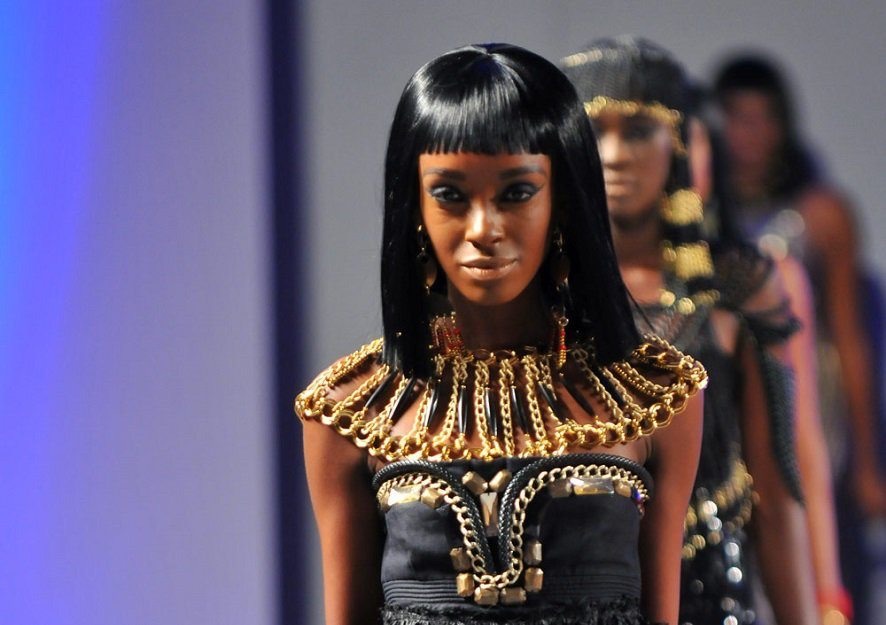
Our ancient Egyptian ancestors were a group of people with a functional sense of fashion in its varying styles and forms. They adorned their bodies with clothes that served physical, religious and ceremonial functions, doing away as much as possible with excess material acquisition.

Linen was one of the major fabrics used by the ancient Egyptians in the making of their clothing. The linen in question was obtained from flax planted in the areas around the River Nile.

During harvest season, the flax was accessed and soaked in water to soften it. It was then beaten into a pulp-like material which was further processed in sequential stages to yield the fine linen used by the high and low alike in the making of their attires.

Men of the ancient Egyptian civilization wore an ankle-length linen kilt. Some scholars have argued that the ankle-length linen kilt was worn by the Egyptians of the Middle Kingdom (2040 – 1782 BCE) and that the Old Kingdom (2686 – 2181 BCE) Egyptians made use of a shorter linen kilt wrapped around the waist, held fast in place by a leather or linen belt.

The male royals of ancient Egypt adorned their upper bodies with scores of jewellery to publicly make known their status. The peasants and working-class men often wore a simple knee-length coarse linen fabric around their waist area when working and adorned their bodies with what fine linen they could afford on ceremonial occasions. Ancient Egyptian men also shaved their bodies clean off hairs as they believed it made them unclean. The priesthood especially always carried themselves about in a clean-shaven bodily outlook with a touch of make-up and a whiff of perfume to top it all up.

Women of ancient Egyptian civilization also used the linen fabric extensively in adorning their bodies. The linen was cut in a way that enabled ancient Egyptian women to drench it all over their body using a piece of jewellery to hold in place where proven most convenient. The royal females of the ancient Egyptian civilization also followed the tradition of body shaving; leaving their bodies clean and smooth. Their footwear was made of varying materials of which leather formed a considerable part. The affluent amongst ancient Egyptian women wore a more transparent form of linen which was quite pricy given the average populace. The linen fabric was ideal for the relatively dry weather conditions prevailing in those times.

The use of make-up was widespread amongst ancient Egyptian nobles and commoners alike. Notable amongst their make-up arsenal was the kohl; a black-coloured substance applied to the area around the eyes to shade them for the ‘Evil eye’ and harmful rays of the Sun. Some archaeologists discovered tombs of ancient Egyptians containing make-up kit comprising of; bronze or copper mirrors, facial ointments and application tools. A substance called ‘ochre’ was processed by the ancient Egyptians to make rouge; a red powdery substance that was mixed with ointments to make lip balms. This was used by women of the ancient Egyptian civilization to beautify their lips.

Jewellery held a dear place in the hearts of men and women of the ancient Egyptian Kingdom alike. The extensive use of gold and lapis lazuli to fashion symbols and totems of their spiritual leanings was commonplace. Both men and women of ancient Egypt were usually buried with generous amounts of jewellery to be used in their next life.

The scarab beetle was one of those symbolic jewellery used by the ancient Egyptians, they believed it represented rebirth and the cyclical nature of time thus, it formed a considerable part of the treasures some ancient Egyptians were buried with.

Afrikan Theobroma: Mental & Physical Health Benefits Of A 21ST Century Party Drug!

Theobroma is the Latin word for ‘Food of the Gods’. This was the title given the cocoa plant by occupants of Mesoamerica during the 16th century. The Mayans, Aztecs and other advanced civilization of present-day South America are credited with the initial plantation of the cocoa plant, this they used for nutritional, health, religious and recreational purposes.

Some scholars argue that cocoa was introduced to the Afrikan continent by the coming of Western adventurers during the 14th and 15th centuries, whilst others are of the belief that ancient Afrikan merchants whose economic responsibilities ferried them around the world came home with cocoa pods.

In the pre-independence West Afrikan country of Ghana, Tetteh Quarshie is claimed to have introduced cocoa to the nation and today, Ghana features as the second-largest cocoa-producing country in the world with an estimated production tonnage of 835,446. The West Afrikan nation of Ivory Coast, however, is the world-leading cocoa producer, producing an estimated 1,448,992 tonnes of cocoa according to Worldatlas.

The beginning of the 21st century saw the presence of a global youthful populace whose desire was to be free from the conventional way of doing things, as well as the needless hardships of life and living. But living within a world that is actually governed by conventions made their physical escape almost impossible; thus they turned to the excessive use of stimulants and other brain-altering substances in the likes of; cocaine, methamphetamine (crystal meth), ecstasy and speed in order to achieve the much sought-after mental escape. These laboratory-manufactured substances, however, have taken a negative toll on the health and quality of life of the youth in question, and so the more enlightened ones have turned to a healthier drug to stimulate their party-driven lifestyle.

In ‘Why Snorting Cacao Could Be the Next Big Party Drug’, Yenisey (2016) argues that; ‘In fact, cacao as a party drug is so popular in Western Europe, that it’s a common substitute for alcohol and other illegal drugs like ecstasy…and there is even a monthly party in Berlin called Lucid that is dedicated to getting party-goers…” make use of cocoa as a stimulant to fuel their party frenzy.

The rapid widespread use of cocoa as a party drug is due to the numerous health benefits contained in cocoa. Raw cocoa powder contains a compound named Polyphenolthis is a naturally occurring substance that helps rid the body of toxins gathered from the food we eat, the water we drink and the air we breathe.

Raw cocoa powder also helps release a compound named Serotonin into the nervous system which acts with the body to give the individual a lasting feeling of; happiness, calm and relaxation. Helping fight depression and anxiety in the wake.

Again the Afrikan Theobroma contains another compound named Flavanol which strengthens the blood vessels thus, improves blood flow to the brain preventing the sudden occurrence of heart attacks and the deathly stroke. This same compound improves upon High Blood Pressure and the overall health vitality of the brain.

Studies conducted on the properties of cocoa have discovered that it contains cancer-fighting properties that can aid in stunting the growth of cancer-producing cells. It is however argued that this singular health benefit of raw cocoa powder is not conclusive. But given the rich anti-oxidant properties of cocoa, it most probably stands the great chance of fighting cancer. Some animal studies have also revealed that a rich cocoa diet significantly reduced the occurrence of breast and pancreatic cancer in farm animals.

To add, Theobromine and Theophylline are two of the numerous useful compounds found in cocoa. These two assist with persons who suffer from asthma. The compounds have the ability to open up the airway for asthmatic patients to breathe effectively when used regularly and judiciously.

It is in the preservation of health that the quality of living can be maximized. So in the end, those persons who seek to heighten the experiences of their senses in enriching the quality of their day to day living can consider employing the use of the healthily sacred cocoa.

Ren, Ba, Sheut, Ka & Ib: Ancient Egyptian Roots of The Modern Discipline Named Psychology!

“According to the teaching of Buddha, the idea of ‘Self’ is an imaginary false belief which has no corresponding reality, and it produces harmful thoughts of ‘me’ and ‘mine’, selfish desire, craving, attachment, hatred, ill-will, conceit, pride, egoism and other defilements, impurities and problems. It is the source of all the problems in the world from personal conflicts to wars between nations. In short, to this false view can be traced all the problems in the world.” – Walpola Rahula, 1959.

The emergence of the ‘scientific’ study of the human mind, personality and behaviour led to questions surrounding the true nature of man and the underlying mechanisms influencing man’s reaction to cues in the environment. This inquiry further stoked the passion of its pioneers to discover the ancient origins and ideas giving rise to the structured study of mind, personality and behaviour presently named; Psychology.

Wickramasekera (2014) revealed in his work;‘Early Psychological Knowledge’ that “Psychology is often thought of as a relatively new field of scientific inquiry, compared to its more established relatives in science such as mathematics or physics.”And this is a positive observation of the Psychology discipline given the fact that the first known ‘scientific’ study of Psychology was undertaken by the German scientist; Wilhelm Wundt in Leipzig, Germany, 1879.

Wilhelm Wundt’s studies focused on Sensory Perception and the nature of Consciousness; two focal points that were later ‘developed’ by Edward Titchener into the Psychology school of thought named ‘Structuralism’.Structuralism simply sought to study the ‘structures’ of consciousness as initially proposed by Wilhelm and his colleagues.

Max Wertheimer and Wolfgang Koehler appeared on the scene in the 20th century with a counter-narrative of their own that forwarded that; consciousness is whole and thus, cannot be dismantled into structures. This theory of theirs led to the formation of the ‘Gestalt’ School of Thought.

Sigmund Freud hopped unto the bandwagon with his ‘Psychoanalytic’ School of Thought which drew on; sex drives and childhood experiences as two major factors that drive human behaviour. J.B. Watson contributed his own share of ideas to the growing discipline of Psychology with his ‘Behaviorism’ School of Thought. His unique observations of human behaviour led him to conclude that; human behaviour was extensively driven by environmental factors and that internal mental processes had little to nothing to do with human behaviour.

Other equally important scientists emerged on the scene along with the aforementioned, also forwarding their own well-thought-of ideas concerning the discipline in question, however, the scientists named so far and their respectable theories were all of a Western and European origin.

Thus we were left with the question as to whether their ideas and theories were binding on the Afrikan and persons of Afrikan descent since they derived their conclusions from observations made within their own geographical boundaries. We were thus led to explore what our ancient ancestors thought of man and woman; their constituent nature and the driving forces of their behaviour. 

The ancient Egyptian understanding of Psychology as a discipline was developed within the framework of their spirituality such that; the factors that influenced human behaviour were to the ancient Egyptians, not variables that could be fully understood in a laboratory setting, but could be brought to light with a spiritually intuitive mindset. In view of this, and amongst other influential knowledge bases, ancient Egyptians resolved to the study of ‘Self’ as a seat of human behaviour.

What the Self is, is quite tricky to define unless within the context of a personalized definition. It can be thought of as the ‘ghost’ in Gilbert Ryle’s ‘machine’, that unseen aspect of ourselves breathing life into our thoughts and motion into our movements. According to the ancient Egyptians, this Self is made up of five parts namely; Ren, Ba, Sheut, Ka & Ib.

Ren refers to the name given a person at birth, and the ancients believed that a person’s given name had a great influence on the said person’s life and consequent behavioural traits. This ancient Egyptian idea is not far removed from that of their Bantu-Kongo relatives who also held the belief that names embodied the energy force of persons who wielded them in the past, and such forces had a considerable bearing on the behaviour of the one newly named by it.

Ba is what modern Psychologists will refer to as the Personality of any given individual. Represented as a hawk with a bearded human head, the ancient Egyptians regarded Ba as the soul of the individual, the aspect of the Self that moves out of the body when a person dies. It is Ba that defines the extent and quality of one’s personality and interpersonal relations.

Sheut is the shadow aspect of the Self. Within the parlance of modern science, we know that a shadow is formed when a solid object blocks the path of light. So could this ancient concept of Sheut be similar to Carl Gustave Jung’s idea of the Shadow Personality that is brought to life by accumulated suppressed desires and cravings? The shadow aspect of the Self, however, influences our behaviour and the quality of our interactions with those around us.

Ka is what the ancients call the Life Force of a person’s Self. Ka can thus be likened to Lendo Kia Kukiniakisa of Bantu-Kongo origin which literally translates into; ‘Self-Healing Power’. Ka represented the energizing essence of the individual. One who is low on energy is not one to put up an energetic display in one’s relation with others, and the opposite is true.

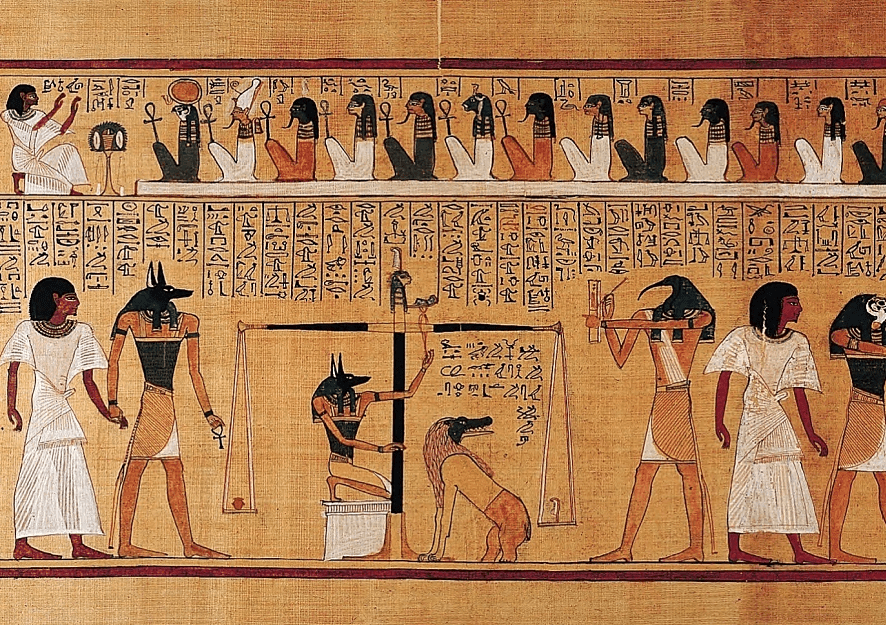
Ib, representing the final aspect of the Self is the seat of one’s emotions, thoughts and ensuing behaviours. It can most probably be thought of as the melting pot for all the other aspects of Self aforementioned. The ancient Egyptians pointed to an individual’s heart as the physical location of the non-physical IbIb according to our ancient Egyptian ancestry was measured against the feather of Ma’at by Anubis of the Underworld upon the death of an individual. If Ib weighed more than the feather, a crocodile-headed god would consume Ib and that aspect of the Self will be lost to the individual, to be constructed anew in another life most probably.

So, in a nutshell, there is enough reason to suggest that ‘Psychology’ as a structured modern discipline derived its essence from the teachings of antiquity, not restricted to ancient Egypt alone. All things emerge from a point in the past and evolve with time and circumstances as made evident in Charles Darwin’s On the Origin of Species thus, it is only courteous to acknowledge the far-reaching sources of our modern-day disciplines as well as the wisdom they bring to bear on the progress of the human race.

Dr. Chester Pierce: The Black Psychiatrist Who Enhanced Racial Equality In America Through Sesame Street!

“Early childhood specialists have a staggering responsibility in producing planetary citizens whose geographic and intellectual provinces are as limitless as their all-embracing humanity.” – Dr Chester Pierce, 1972.

Racially divided America of the 20th century weighed heavily on the growth and developmental progress of not only the institutions and systems by which the citizens were governed, but also had a very negative bearing on the psychological health of the average American, Afrikan-American and children from other minor racial groups of the time.

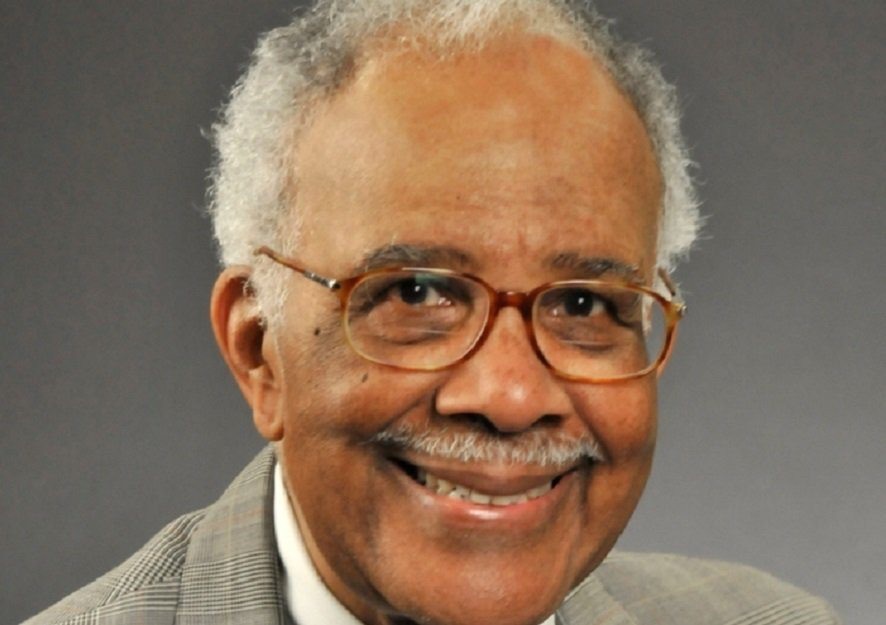
Born on the 4th of March 1927 in Glen Cove, New York, Dr Chester Middlebrook Pierce was one of the few brave Afrikan-Americans of his era who realized the need to employ proactive measures in tackling the issue of racial discrimination on the streets of America. For it was commonplace knowledge that; freedom is not freely given, and the privileged seldom gave up their privileges willingly.

A professor of the Harvard Medical School, Harvard School of Public Health and Harvard Graduate School of Education, Dr Chester Pierce led the formation of the Black Psychiatrists of America in the midst of Dr Martin Luther King’s assassination and racial riots of the latter part of America’s 20th century, to lead the cause of racially integrating America with a particular focus on the growing American child, Afrikan-American child and children from other minor ethnic communities present in America.

In 1969, some members of the newly formed Pierce-led Black Psychiatrists of America interrupted a meeting of the American Psychiatric Association demanding equal representation of Black and White persons alike on the various boards of the said Association. This move was inspired by the prevailing idea that racism and the negativity it bred was not a situation brought about by a few light-skinned White men and women with a hate-clouded mindset, but was intricately woven into the institutions and systems of America’s governing body.

To the visionary Dr Chester Pierce, the television was one of those institutions that were being used as a weapon to inflict psychological damage on an innocent minority of 20th century America. He believed in a world where the respect and dignity inherent to any person irrespective of race, creed or socioeconomic background will be upheld unconditionally, and most importantly; he believed the emergence of this world would begin with the growing child.

Given his racial reformation agenda, the noble Dr Chester Pierce collaborated with the makers of Sesame StreetJoan Ganz Cooney and Lloyd Morriset in 1969 as an advisor to see to the racial balancing of the cast within the Children Television Program.

The creators of Sesame Street intended for the television show to serve as a medium of education for the deprived ethnic child minority living in America, Dr Chester Pierce, however, saw in the initiative an opportunity to bring to life his vision of a racially integrated America, beginning with the growing child. In view of this, he advised the inclusion of characters from all racial backgrounds, especially those falling within America’s ethnic minority bracket.

The official airing of Sesame Street in 1969 saw the featuring of a strong black male presence; Sir Gordon, who played the part of a school teacher, an ideal role model for the growing black child. The Sesame Street character, Sir Gordon’s wife; Susan, was also a black woman whose role in the children television program was worth emulating by the young female child. In subsequent episodes, Sesame Street featured Hispanic characters as well, all in a bid to realize the vision of a racially integrated America, beginning with the growing child.

Sesame Street carried on in the American culture as one of the most successful televised puppet shows ever.

Dr Chester Middlebrook Pierce died on September 23, 2016.

Euphemia Lofton Haynes: The First Black Woman To Earn A PhD In Mathematics!

Persons who have made it their mission to understand the nature of our universe have over the past millennia submitted that the universe is organized in a precise mathematical framework, such that all that happens in the world above and below is actually an effect of a series of mathematical causes whose consequent effects bear in them the narrative blueprints of their intended sireship. The Fibonacci Sequence, the Phi and the Golden Ratio are but few examples of the numerous numerical frameworks woven into the make of our world.

So, every generation births its own share of persons who are endowed with the natural ability to understand the mathematical language of our universe, using the messages therein to elevate the quality of lives of the masses.

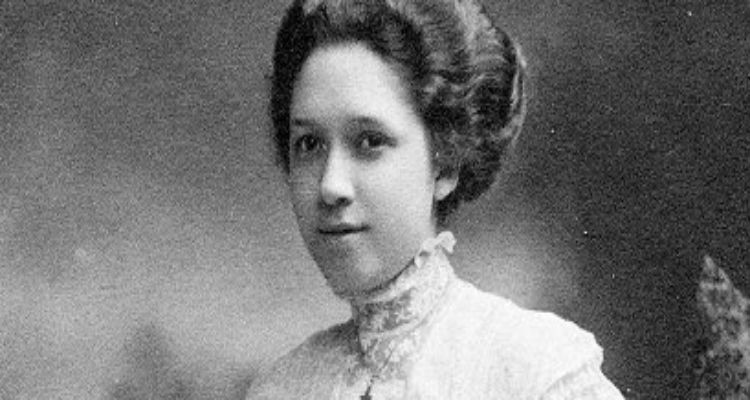
One of such ‘number prodigy’ was the elegantly beautiful Euphemia Lofton Haynes. Born Martha Euphemia Lofton into an influential and wealthy parenthood in 1890 on the streets of Washington D.C, little Euphemia relished the innocence of her childhood in relative comfort, with the ease of access to schools of good academic standing. She was also a gifted youngster whose climb up the academic and social ladders were made feasible given her high level of intelligence and warm social skills.

The gifted Euphemia attained High School education in 1909 at Washington’s Miner Normal School; here, her dedication to work, passion for leadership and commitment to duty was unmatched and this saw the young prodigy sail through her academic journey with impressive records.

Four years after High School, Euphemia stepped up her ‘academic identity’ with a Bachelor’s degree, taking up major studies in Mathematics with a minor focus on Psychology in 1913. The period from 1913 when Euphemia chalked her undergraduate success to 1930 when she bested her Master’s in Education from the University of Chicago was one marked with personal initiatives as well as communal duties all geared towards improving upon education, promotion of cultural and racial integration within schools and communities as well as provision of avenues that afforded poor Afrikan-Americans and other children of ethnic minority background the opportunity of a decent and an affordable formal education.

In the year 1930, Euphemia Lofton Haynes (Haynes was the name of her husband; Harold Appo Haynes whom she married in 1917) established the Department of Mathematics at Miners Teacher’s College where she played leadership and administrative roles. Other academic roles and leadership positions taken up by the brave, fierce and intelligent Euphemia Lofton Haynes not necessarily tied to the early part of the 1900s included; Teacher of mathematics at Armstrong High School, Department Chair of Dunbar High School’s math department and as an English teacher at Miner Normal School. These responsibilities Euphemia accepted because of her love for examining the best methods of teaching and learning, and her passion for creating opportunities for the growth for all.

Euphemia Lofton Haynes earned her Doctor of Philosophy (PhD) degree in 1943 at the Catholic University of America. Her strong association with Catholicism and the Catholic church saw her serving its members as the Vice-president of the Archdiocesan Council of Catholic Women, and upon her death on July 25th, 1980, she is said to have gifted in trust an amount of $700,000 to the Catholic University of America where she attained her famed doctorate, a qualification that catapulted her into historical limelight as; The First Black Woman to Earn a PhD in Mathematics.

Meet The Little-Known Ancient Egyptian God of Creation & The Law of Attraction!

Little is recorded of the ancient Egyptian God of creation throughout the annals of history, but the little that is known is worthy of appraisal as it bears on the health and vitality of our knowledge of the past and the stories it tells of our origin and becoming.

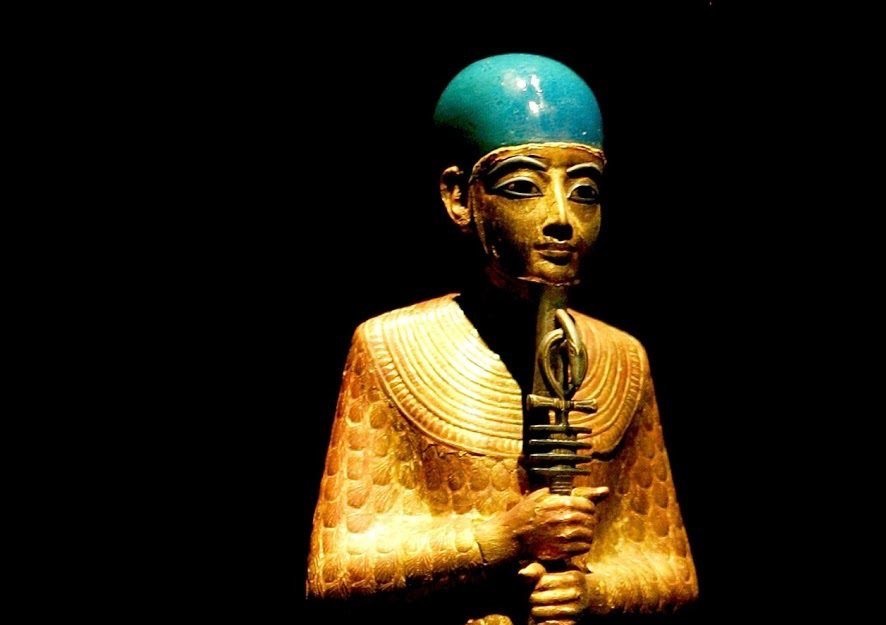
In the ancient Egyptian Kingdom of Memphis, located approximately 12 miles South-West of present-day Cairo, lives an old tale of a certain Creator-God of the ancient Egyptian Kingdom named; Ptah. The stories surrounding the origins of Ptah stretch to as far back as before the onset of the ancient Egyptian civilization (approximately 4400BC) because he is upheld as the God who warranted the existence of all things within the physical Universe and beyond.

The Memphis Creation Myth is a text written by the then natives of Memphis around 700BC, giving credence and popular credibility to Ptah. Memphis was the capital of a unified Egypt at the time, so it was incumbent on her leaders to represent the capital with a God-head; Ptah, the Creator-God was chosen amidst deliberations and considerations as suitable for the city’s newly acquired status.

Ptah is said to have married the local Memphite goddess named Sekhmet. She found favour in the eyes of the Creator-God because of her unique personality traits; she represented the spirit and dignity of a lioness, this divine endowment saw her dealing justice where it was required and giving love, protection, healing and care where it was called for as well. Together with the Creator-God, Sekhmet gave birth to Nefertum and Maahes. Ptah is however recorded to have also fathered the Great Ennead of Heliopolis, a set of nine ancient Egyptian deities named; Atum, Shu, Tefnut, Geb, Nut, Osiris, Isis, Seth and Nephthys. The first five deities are representative of the five forces of creation, and the remnant four given control over the political administration of creation by Ptah himself.

Imhotep; the priestly genius of Egyptian fame is said to have been adopted by Ptah himself to be nurtured in the ways of the wise for the benefit of a collective humanity, and his astonishing achievements to which the annals of history attest to stand to bring to light the supremacy of Ptah’s own off-the-charts intelligence as well as fatherly attributes.

This is the point in the story where we find out how Ptah carried about his creation duties. The Creator-God is recorded by his priests and court servants to have used the power of his THOUGHT animated by the force of his WILL-POWER to bring into physical manifestation the product of his creative thoughts by WORD OF MOUTH. This creation method is not so different from the infamous ‘Let there be light, and there was light’ of the Judeo-Christian creation tradition as recorded in the Bible. It follows according to a Memphite theological doctrine dated approximately 710BC that the Great Ennead of Heliopolis along with the remnant of creation was granted existence this way.

Ptah’s method of creation is very similar to the way and manner we create our own circumstances as sons and daughters of the Creator-God whose creative essence lives in us. There is a certain cosmic, or should I rather say universal law by which we draw into our lives all of the prevailing circumstances we have interacted with, are interacting with and will be interacting with, in the near future. This Law which acts in tandem with other cosmic laws has been named The Law of Attraction by the ancients who discovered its unbending power.

An anatomical dissection into The Law of Attraction will ferry us into the world of Quantum Physics or Quantum Mechanics as some scholars choose to address it, for it is in this world that we can better understand the nature and true power of our Thought and how they bear on the circumstances and situations we are faced with.

One of the most fundamental principles of The Law of Attraction is that; we attract into our own world, or personal space if you like, what we repeatedly think of. Our Thought in the scientific world of Quantum Physics is energy, it carries an atomic weight and therefore retains in it the power to give rise to creation as well as change the course of creation. The Creation made possible by our Thought is the creation of those day-to-day circumstances and social situations within which we carve out our lives and the quality of our living, so that the student who anticipates failure and persistently, or rather helplessly feeds his anticipation of failure with varied mental scenarios of how the failure will come about is one who is very likely to encounter failure given a written exam or a practical test, the opposite is so true!

Our Thought is energy, and active Thought is active energy. The universe and her constituent bodies are observed within the confines of the five senses as an impressive artwork of Ptah’s ingenuity, however, we often do not give attention to the underlying forces giving rise to their place, position and powerful influence on the quality and direction of our lives. We are obviously an integral part of this Universe, differentiated from the rest of creation only in kind. We are thus connected to the rest of creation from the standpoint of our immaterial identities, our Thought of which will serve a suitable example of such immaterial make. It is in the silence of our Thought therefore that we can quiet the noise emanating from the distractions around us and commune with the rest of creation, dictating the course and quality of the experiences with which we are faced because we retain the power to attract or repel them.

The core essence of creation is eternally Good, therefore the quality of the Thought with which we intend to serve as co-creators with Ptah must be inherently Good as well. And by Good, we are encouraged to ensure that the circumstances we mentally envision in our bid to bring them into physical manifestation MUST serve the individual as well as the collective interest of all persons. For creation seeks to multiply, provide for, expand and venerate all things living thus, any other creative force whose mission falls short of Ptah’s benevolent desire to bring into realization a harmonious Universe will fall victim to the negative effects of its own undoing.

The Ancient Ugandan kingdom That Perfected Caesarian Section Long Before Contact With Europeans!

Up until the late 19th century, infection-free surgery was yet to be born in the medical houses of England and many parts of the western world. A Caesarian section in England was regarded as an operation of the greatest gravity only to be performed in the most desperate of circumstances (Young, 1944).

Surgical practitioners in Europe were also recorded to have washed their hands after surgery and usually not before, they were also caught up in having to choose between the mother or child regarding whose life to preserve in the course of a Caesarian section.

The ‘medicine men’ and highly experienced surgeons of the Bunyoro-Kitara Kingdom of present-day Uganda have carried out advanced level infection-free and highly successful Caesarian sections since the days of antiquity, and as far back as the ancient Egyptian civilization stretches.

Bunyoro-Kitara is a Kingdom located around Lakes Victoria and Kioga. Her western borders were guarded by the dense forests forming the Congo Basin, her eastern and southern borders were manned by the highlands of East Africa and her northern frontier protected by the swamps of southern Sudan. The indigenes were farmers, artisans and highly skilled medical practitioners; art forms they were able to nurture given the near-isolated nature of their location. One of the crafts the medicine men of Bunyoro-Kitara succeeded in developing to a high degree is that of the Caesarian section.

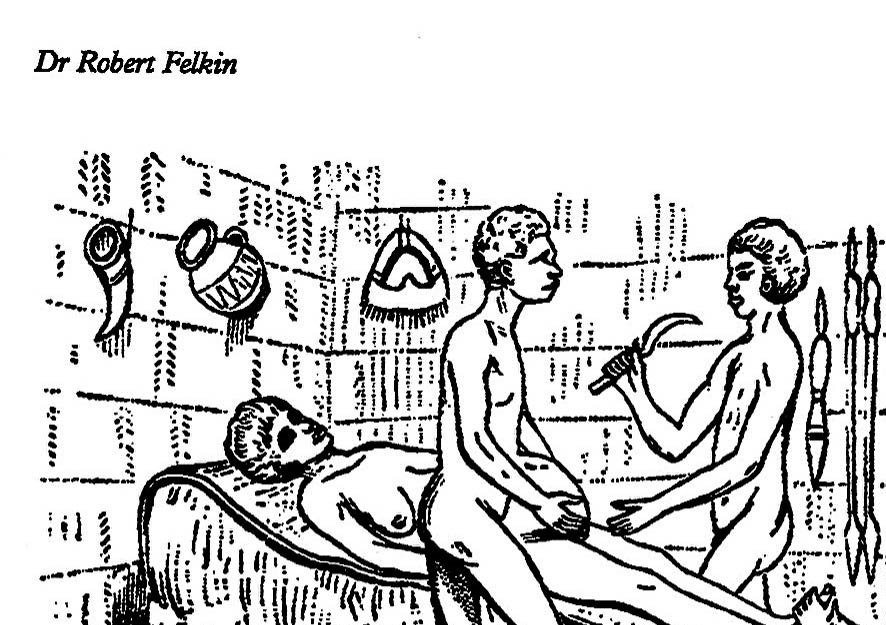
One explorer; R. W. Felkin, after a few years of study in medical school volunteered along with some friends of his to go as missionaries to the Ugandan Kingdom of Bunyoro-Kitara in 1878. Over there, he had the rare privilege of witnessing a medicine man of Bunyoro-Kitara carry out a highly successful Caesarian surgical procedure on a 20-year-old woman…

…In the Ugandan hut where the Caesarian section was to take place were three men; one was holding a knife, the other was holding unto the ankles of the young woman and the third stood above her abdomen, supporting either sides with his hands in the course of the surgical procedure. The surgeon who wielded the knife foremost washed his hands, surgical instruments and the abdomen of the young woman with banana wine for sterilization purposes, he then proceeded to ‘baptize’ only his hands and the abdomen of the woman with a clear liquid resembling water…

…the woman was laid in an inclined position with the head of her bed supported against the wall of the hut. She was given a considerable measure of some banana wine to drink in order to make her less sensitive to the surgeon’s blades. Bark cloth was used to cover her breasts and vagina area…

…the surgeon started the Caesarian section by reciting an incantation occasionally voicing out certain key phrases to which the community of his patient’s relative and loved ones gathered outside the hut responded. After the ceremonial prayer ritual, he proceeded with the operation proper…

…the Bunyoro-Kitara surgeon cut the woman’s abdomen from above her clitoris to the point beneath her navel. The cut was done with such precision and such skill as was unprecedented. The surgeon unhanded his knife and reached out for the wailing baby in the womb. Punctured blood vessels were remedied by the use of hot iron, and this was skillfully but sparsely deployed as well. The baby’s umbilical cord was cut and handed along with the baby to the assistant who held onto the woman’s ankle…

the surgeon afterwards turned the woman unto her side close to the edge of the bed so that whatever liquid is left within her uterine walls can drain out, he then closed up the opened area with a paste of medicinal herbs. Sterilized metallic ‘clamps’ were used moments later to close up the open flesh on the abdomen and again covered by a paste made out of roots and herbs mixed in measured proportion…

…with the Caesarian section completed and successful, the Bunyoro-Kitara surgeon delivered woman and baby to her family and she was ushered home amongst cheers, love and happiness.

This practice was common place for the medicine men of Bunyoro-Kitara Kingdom, and they mastered it long before there was any contact with the Europeans as well as explorers, adventurers, missionaries and plunderers from other parts of the world.

The Afrikan heritage still lives, it is a timeless destruction-proof house of insight. Our duty therefore is to explore its rich depth with zeal and passion so that we can by virtue of our satisfied curiosity well-inform our progeny.

References

Davies, J. N. P., The Development of ‘Scientific’ Medicine in the African Kingdom of Bunyoro-Kitara.

Young, J. H., (1944), A History of Caesarian Section, London.

The Talented Tenth: W.E.B DuBois’ Vision For A Progressive Black race!

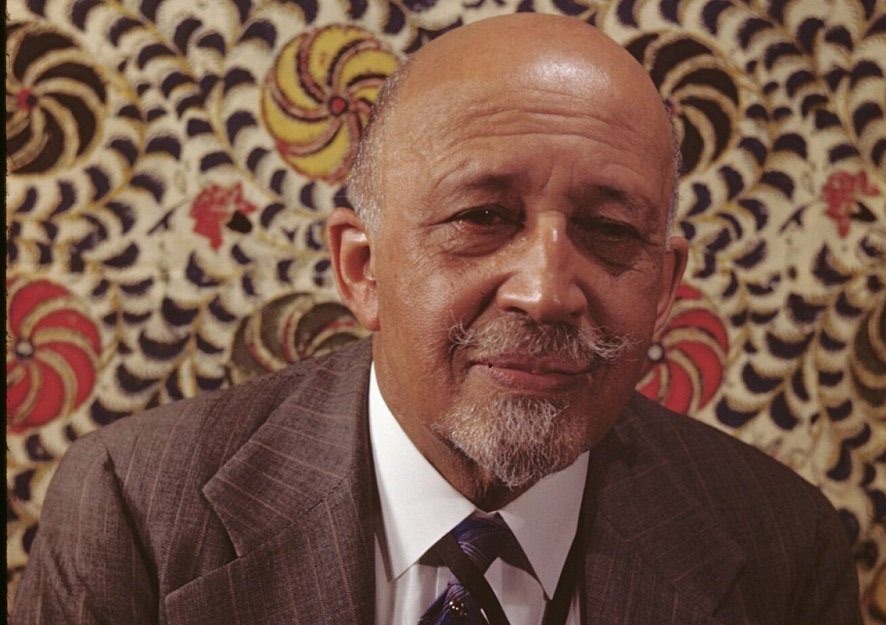
“The Talented Tenth of the Negro race must be made leaders of thought and missionaries of culture among their people. No others can do this work and Negro colleges must train their men for it. The Negro race, like all other races, is going to be saved by its exceptional men.” – W. E. B Du Bois.

The noble art of leadership is inspired by; depth of thought and strength of character. Leadership underlies the organizational structure of every culture and forms a considerable part of the progressive march of every single race on Earth. Leadership wields the power to determine the life span of any group of people, it determines the quality of life a group of people will have and the extent to which the ambitions of those persons constituting it will thrive in a fast-paced world.

In his essay; ‘The Talented Tenth’ (1903), W.E.B DuBois laments the need for ten percent of the ablest minds among persons of Afrikan descent to be granted access to higher and quality education so that they, in turn, will possess within themselves the needed ‘tool’ to lift up the masses to their own level of knowledge and understanding of the world and everything around them.

The Afrikan and persons of Afrikan descent cannot and will not be confined in the corners of ‘the ruled’ for so long because the Black man and the Black woman are very capable of ruling themselves as well as their affairs.

It is true that the capacity of the Afrikan and persons of Afrikan descent to lead themselves and create an atmosphere filled with limitless possibilities for the ones who are yet to come is in question given the current low levels of political, social and cultural dynamics playing out on the Afrikan continent. The system of governance given some Afrikan states is working against the interest of the masses, this has resulted in the surfacing of other social ills such as; corruption, widespread youth unemployment and weakened socio-political institutions.

Though the Afrikan and persons of Afrikan descent are troubled by the presence of these social ills, their capacity to take charge of their own affairs and set straight their priorities in effectively organizing their societies are not affected by it indefinitely. The Afrikan and persons of Afrikan descent must only realize the need for a strong circle of well-informed leaders; persons who by virtue of the high duty entrusted into their hands through higher education and character training will stand out of willingness and commitment to duty as the ‘Messiahs’ of their down-trodden race, for a race cannot remain down-trodden for long, otherwise the persons forming the race in question will by themselves resolve to the lowly status of second-class and/or third class citizens, at which point they become like machines to be employed for labour.

The Afrikan and persons of Afrikan descent the world over also understand that; the best of their crop are plucked while still budding and intentionally crushed underfoot by the hands of those who claimed their ancestors from their homeland and turned them into servitude. With this realization, however, must come the urgency with which the Afrikan and persons of Afrikan descent must inspire and encourage their finest minds and most ambitious of characters to foremost undergo the necessary training so that they can properly order the Afrikan social order and economic progress.

The Afrikan and persons of Afrikan descent must realize that this duty is one that solely lies with us as a people because no alien will without cause to self-interest order our social structure for us and no foreigner can sympathize with the Afrikan experience enough to give to the masses what their hearts have for so long yearned for, and to all they stand in reverent due of!

The Afrikan ‘Talented Tenth’ must no more waste a tenth of their talents, for the duty lies with us all.

Reference.

DuBois, W.E.B. (1903). The Talented Tenth. Pp. 31-75 in The Negro ProblemA Series of Articles by Representative American Negroes of To-Day.

The Dogon Tribe of Mali Discovered This Invisible Star Centuries Before Galileo Invented The Telescope!

The Dogon tribe is a community of people living in present-day Mali. Their original point of migration to their present locale is not known, however, some scholars have traced their ancestry to the ancient Egyptian empire. They are about 300,000 in population occupying about 700 villages with an average of about 500 inhabitants per village.

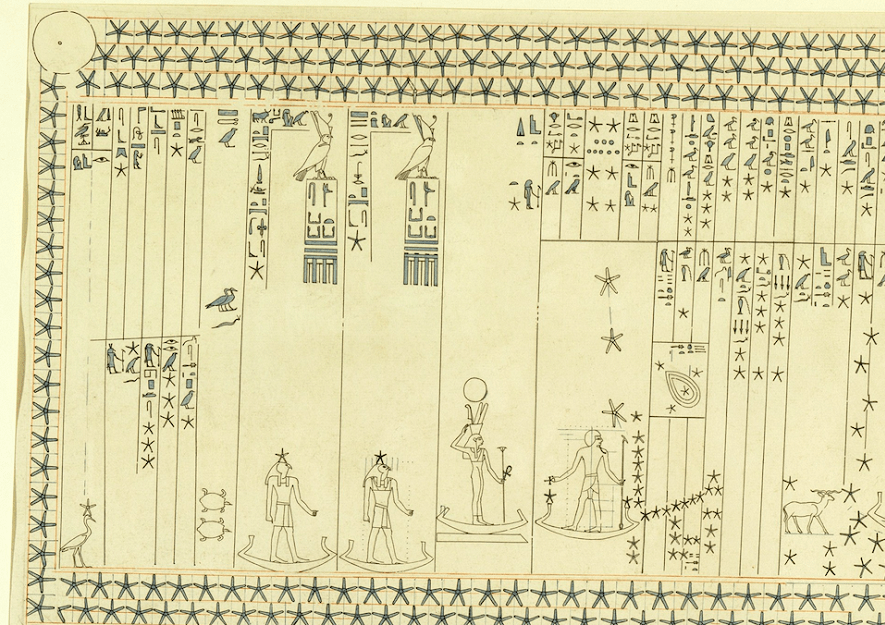
The Dogon tribe possesses a rich oral history and knowledge of astronomy, and this dates as far back as 3200 BC. According to the oral literature of the Dogon tribe, the star named; ‘Sirius A’ (the brightest star in the night sky with a bluish tinge) has an invisible companion star scientists have named ‘Sirius B’. This companion star is not only invisible to the naked eye but also completes a trip around ‘Sirius A’ every 50 years.

Knowledge of the presence of ‘Sirius B’ as an invisible companion star to ‘Sirius A’ and its orbit has been with the Dogon tribe for long and it has been incorporated into their oral literature as well as customs and ceremonial rituals since the days of antiquity, long before Galileo is reported to have invented the telescope in 1609.

‘Sirius B’, the invisible companion star of ‘Sirius A’ remained unseen until a large telescope was used to photograph it in 1970. But even before the invisible star was captured in the night sky by the telescope, Marcel Griaule and Germaine Dieterlen, two French scientists are reported to have recorded information on the presence of ‘Sirius B’ in the sky from four different Dogon Priests.

According to a Dogon oral tradition, a race of beings from the sky named ‘Nommos’ gifted them with knowledge of ‘Sirius B’. The Nommos, according to the oral tradition, looked like amphibians. They came down to the Dogons in what resembled an ark and also taught them many things concerning their own solar system; facts that were observed some years after Galileo is recorded to have invented the telescope.

It is always interesting to discover how advanced in knowledge, skill and wisdom the ancient Afrikan tribes were and the extent of their immense contribution to world civilization. If modern-day indigenous Afrikans, persons of Afrikan descent and the world at large will accord some respect and patience in a genuine bid to learn from the continent of Afrika, her insights and highly guarded secret teachings can and will be made available for the healing of our world.

Studies into the customs, practices, traditions and conventions of ancient Afrikan tribes must always be of prime necessity to the Afrikan scholar because they contain the answers we are looking for to build a brighter future for ourselves and our unborn sons and daughters.

Kher Sesheta: Black Jesus & The Ancient Afrikan Origins Of Christianity!

“That which is called the Christian religion existed amongst the ancients, and never did not exist. From the beginning of the human race until Christ came in the flesh, at which point the true religion which already existed began to be called Christianity.” – St. Augustine of Hippo (354-430).

The debate surrounding the true origins of the Christian religion has raged on via diverse platforms and viewpoints. Christianity, as it is popularly called, is one of the major religious bodies organized around the life and teachings of the man called; Jesus Christ of Nazareth. 

‘The World Book Encyclopedia has reported that; as of the year 2002, Christians formed 40% of the Afrikan continent’s population. This represents a significant number of Afrikans and persons of Afrikan descent exchanging their indigenous religious beliefs for a more ‘evolved’ religious body so to speak. All things; including beliefs, ideas, initiatives and customs have a history that explains their origin. The facts leading to the formation of that history may not always be clear, and some may be lost in the sands of time but there always is an account of some sort concerning the origin of things…

The Christian religion as an organized system of beliefs, customs and practices takes its source from the ancient Kingdom of Egypt; Kher Sesheta is an Egyptian concept that signifies; ‘he who watches over the mysteries’. Christ, the divine concept that forms one of the fundamental basis of Christianity has been associated with this ancient Egyptian concept of Kher Sesheta as deriving from it. And the relationship existing between Christ and Kher Sesheta is the common function they both serve. Christ means; ‘The Anointed One’. One who is anointed is made pure by virtue of the anointing, and it was only the pure who were worthy of watching over the mysteries within the ancient Egyptian organized system of beliefs, thus the individual in question was entitled; Kher Sesheta. Some scholars have also reported that the Greek word; ‘Christos’ has its root in the ancient Egyptian concept of Kher Sesheta.

From the beginning of their civilization up until the Middle Kingdom (2040-1782 BC) ancient Egypt did not have a standing army, and this is because the Kingdom was ruled by Pharaohs who were also viewed as demi-gods; acting between the masses and Ra (The Sun-God of Egypt). Order and harmony were therefore ensured through religious means and using spiritual sanctions during the glory days of ancient Egypt. One of these Pharaohs was the black ancient Egyptian called Tut-Ankh-Amen. Gadalla, in ‘The Ancient Egyptian Roots of Christianity, p65’ makes mention of Tut-Ankh-Amen as the Jesus of history because he was said to be the son of a virgin mother, thus born of immaculate conception and worthy to be called; ‘The Messiah’ or ‘The Christ’.

The ancient Egyptians according to Dr. Joseph A. Bailey in; ‘Very Ancient Africans’ Origin of Christianity I’ thought in terms of the coming of a Messiah who will free them from their mortal bondage, and this was most probably because of their advanced insight in spiritual matters. This Messiah was thus sought after in the rise of every other Pharaoh.

The Romans declared ancient Egypt a province in 30 BC, seeking to retain the mode by which the ancient Egyptians followed their ‘Christ’ or ‘Anointed Messiah’ and governed their kingdom, they developed their own organized system of beliefs similar to that organized system of beliefs used by the ancient Egyptians except with characters resembling the Romans. This agenda was solidified during the Nicaea Council of 325 AD. Thus the ‘Pharaonic Christ’ and his organized system of beliefs as well as his ‘Christian’ following were all drafted into the Roman Christianity.

This rebranded system of beliefs was later reintroduced to Afrika as the ‘Christian Religion’ and as the way through which persons seeking spiritual redemption can reach it.

All things serve their place in the space of time, and as all things evolve, so does the customs, traditions, beliefs and conventions that move the human race. Some have found their peace within the confines of religion, others found a home in religion. Can we, therefore, query another for their belief or unbelief and objective of life? Just as the concept of suffering cannot be generalized as each person’s experience is uniquely different, the path by which men and women pursue happiness cannot also be generalized. History must however be uncovered, for it is with the understanding we gather from the past that we as a race of humans can well-equip ourselves to explore the future.

References.

Bailey, A. J. (2016). Very Ancient Africans’ Origins of Christianity. Voice.

Mark, J. J. (2016). Ancient Egyptian Warfare. Ancient History Encyclopedia.

Ya Kama, L. From Isis to Christ: An Essay on the True Origins of Christianity.